Business-Driven Design
Technology decisions support business goals, efficiency, customer experience and long-term growth.
Successful architecture is defined not by the technologies used, but by how effectively it enables organizations to achieve strategic goals. Every decision balances scalability, security, performance, cost and delivery speed, favouring pragmatic, sustainable solutions.
Technology decisions support business goals, efficiency, customer experience and long-term growth.
Systems handle increasing workloads, users and data without major re-architecture.
Solutions are easy to understand, modify, support and extend across their lifecycle.
Applications handle failure gracefully while maintaining availability and continuity.
Security is embedded into architecture, development, deployment and operations, not bolted on.
Reusable components and common patterns improve consistency and accelerate delivery.
Logs, metrics, traces and dashboards give the visibility to monitor and troubleshoot proactively.
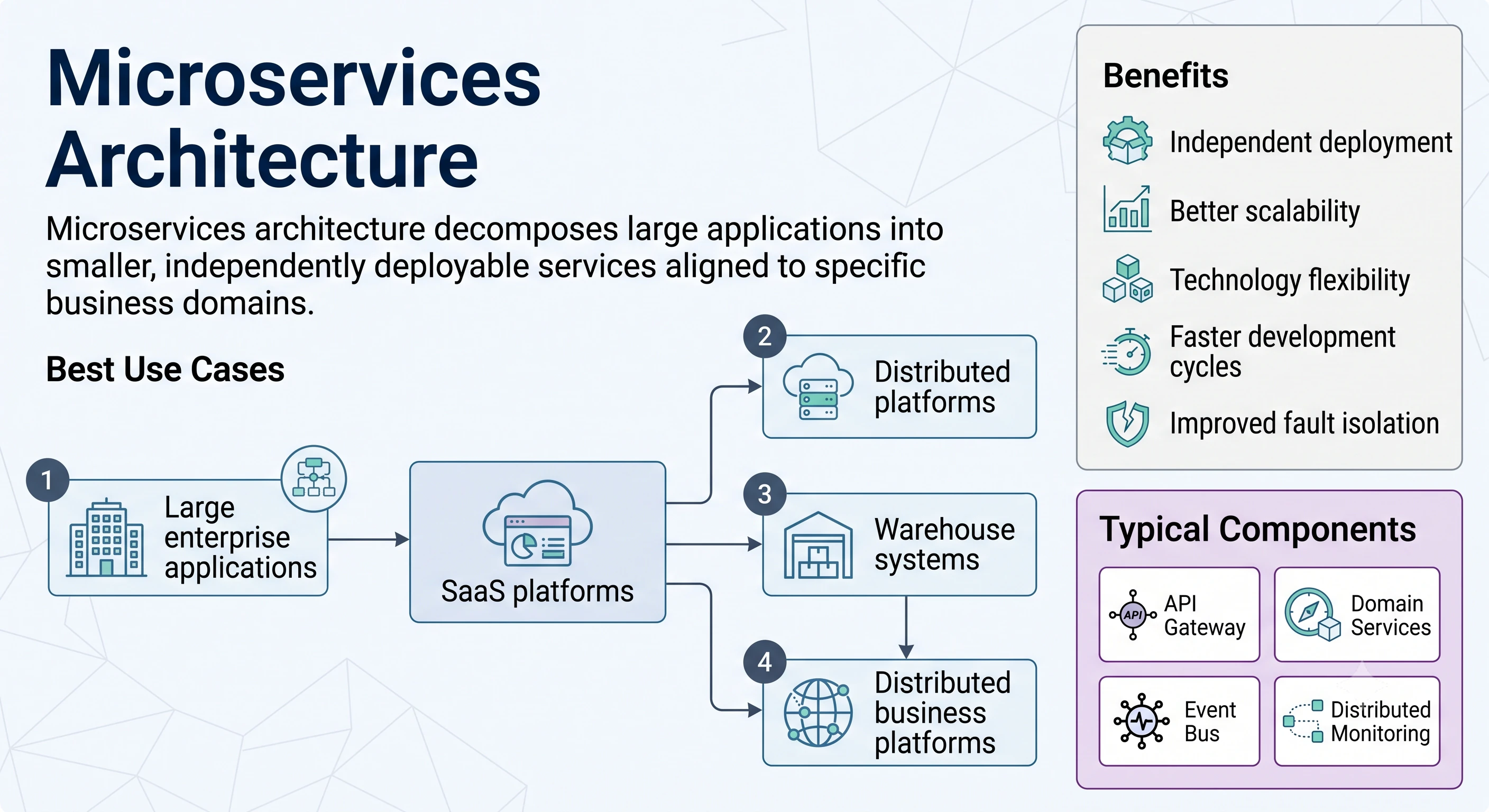
Large applications decomposed into small, independently deployable services aligned to business domains.
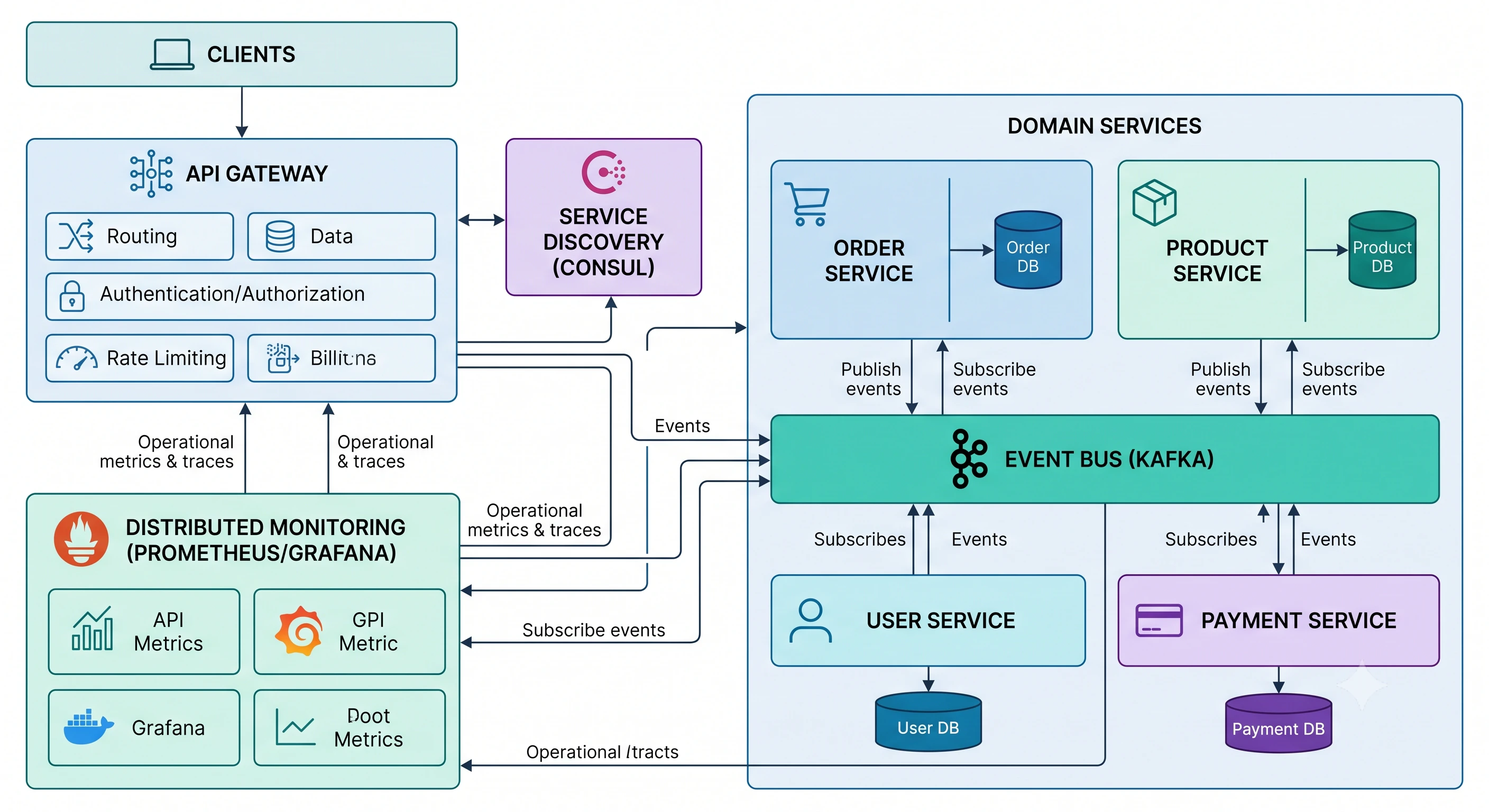
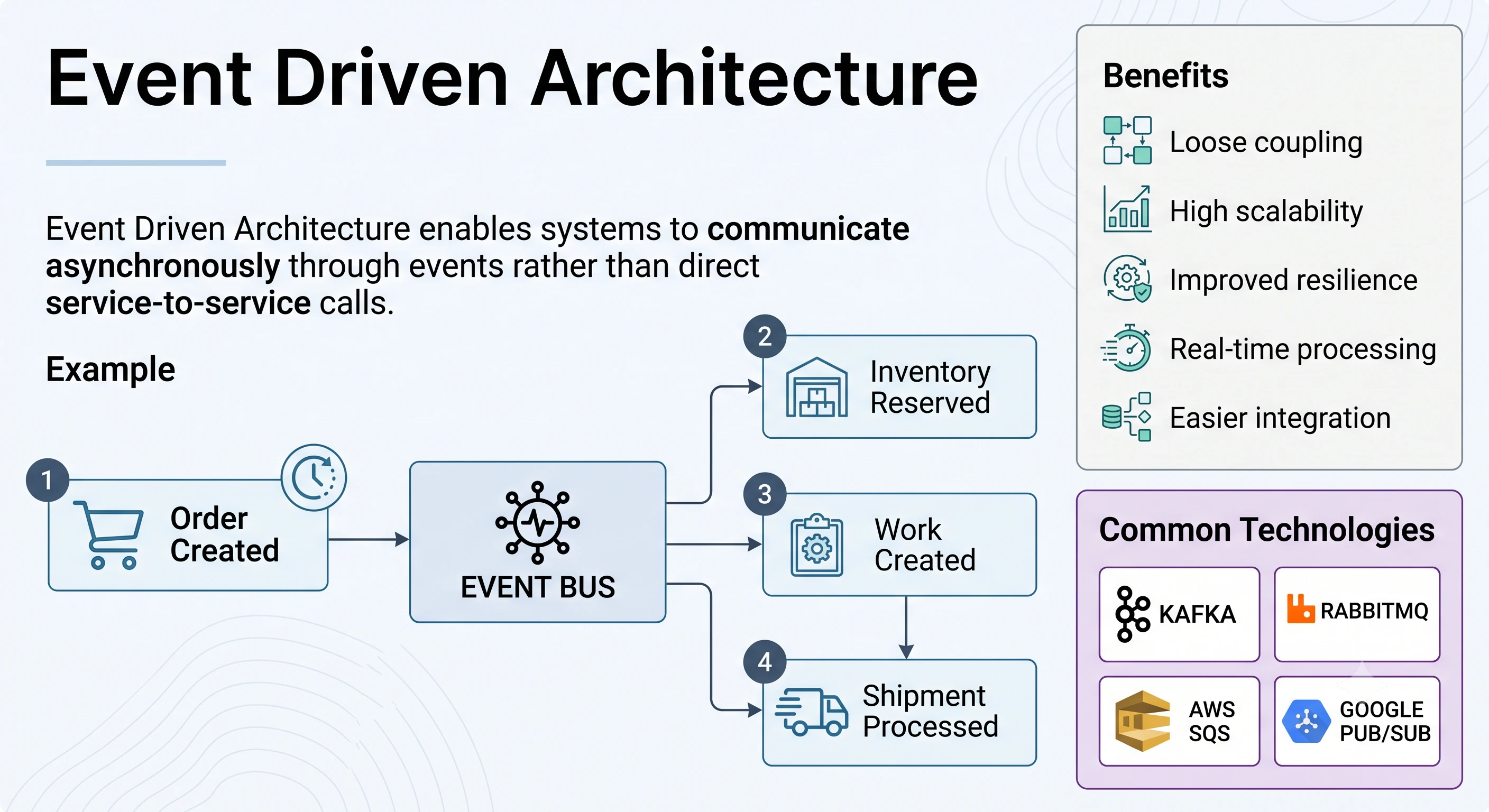
Systems communicate asynchronously through events rather than direct calls.
Order Created → Inventory Reserved → Work Created → Shipment Processed
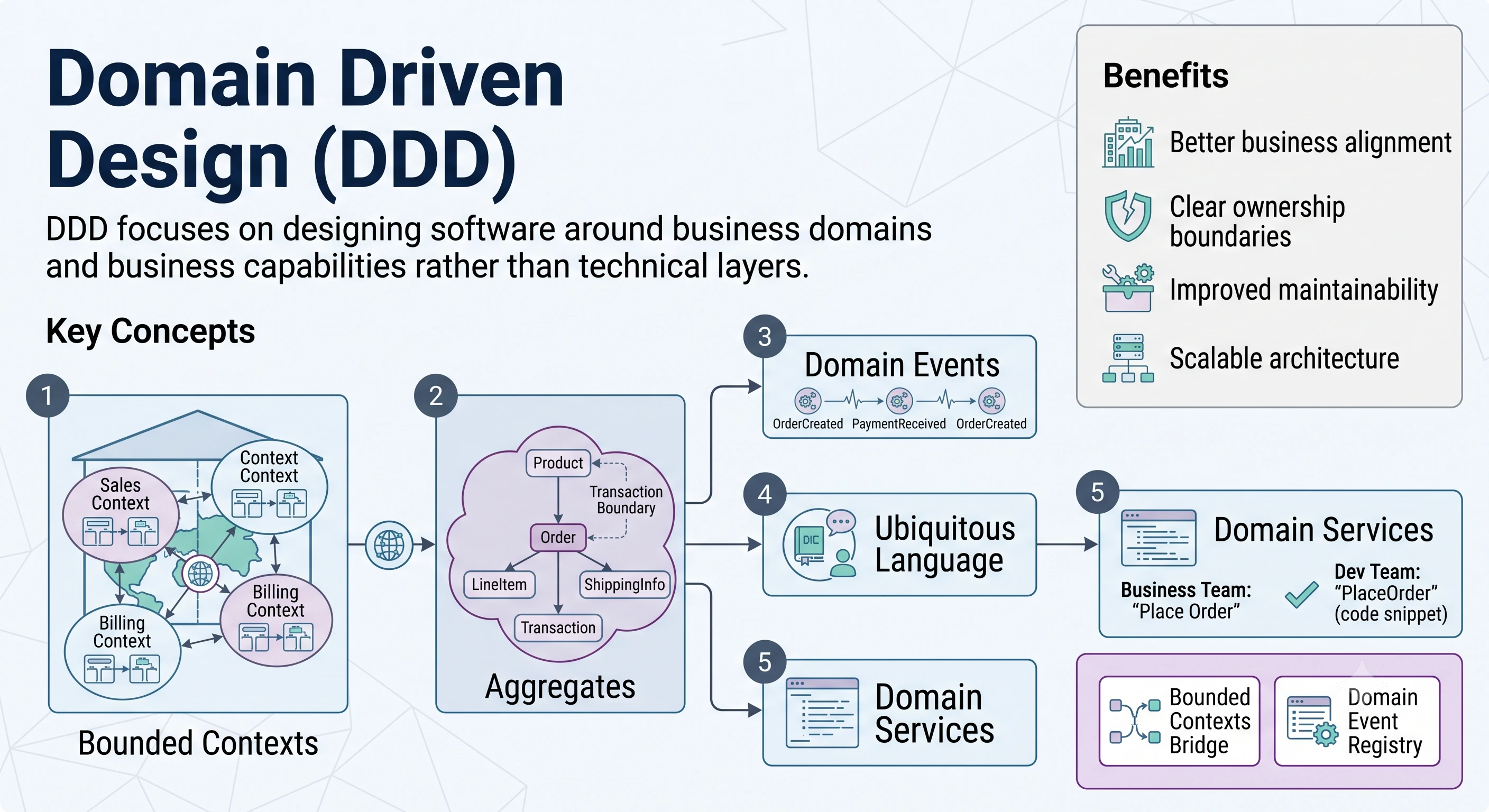
Software designed around business domains and capabilities rather than technical layers.
APIs treated as products, designed before implementation.
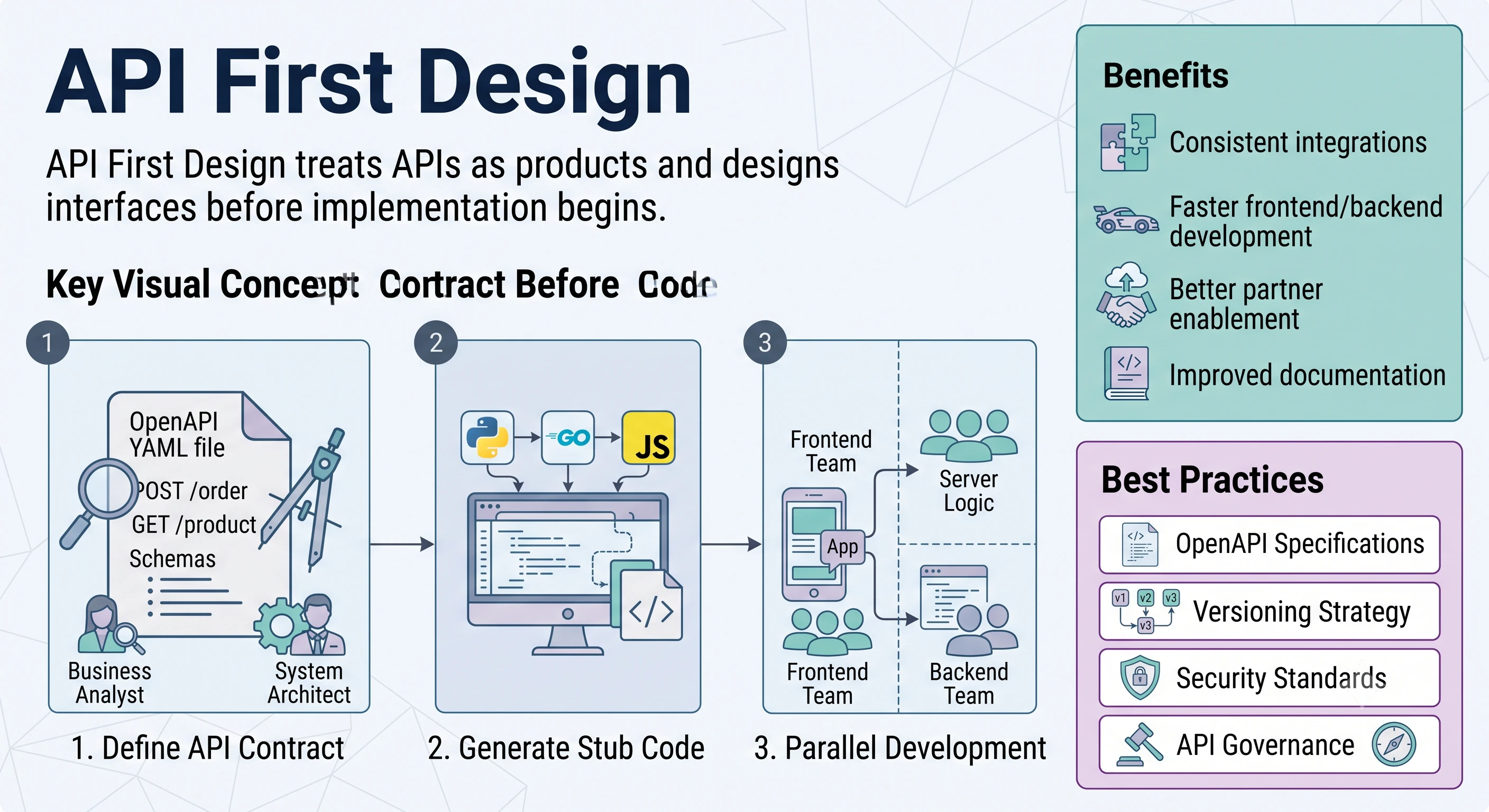
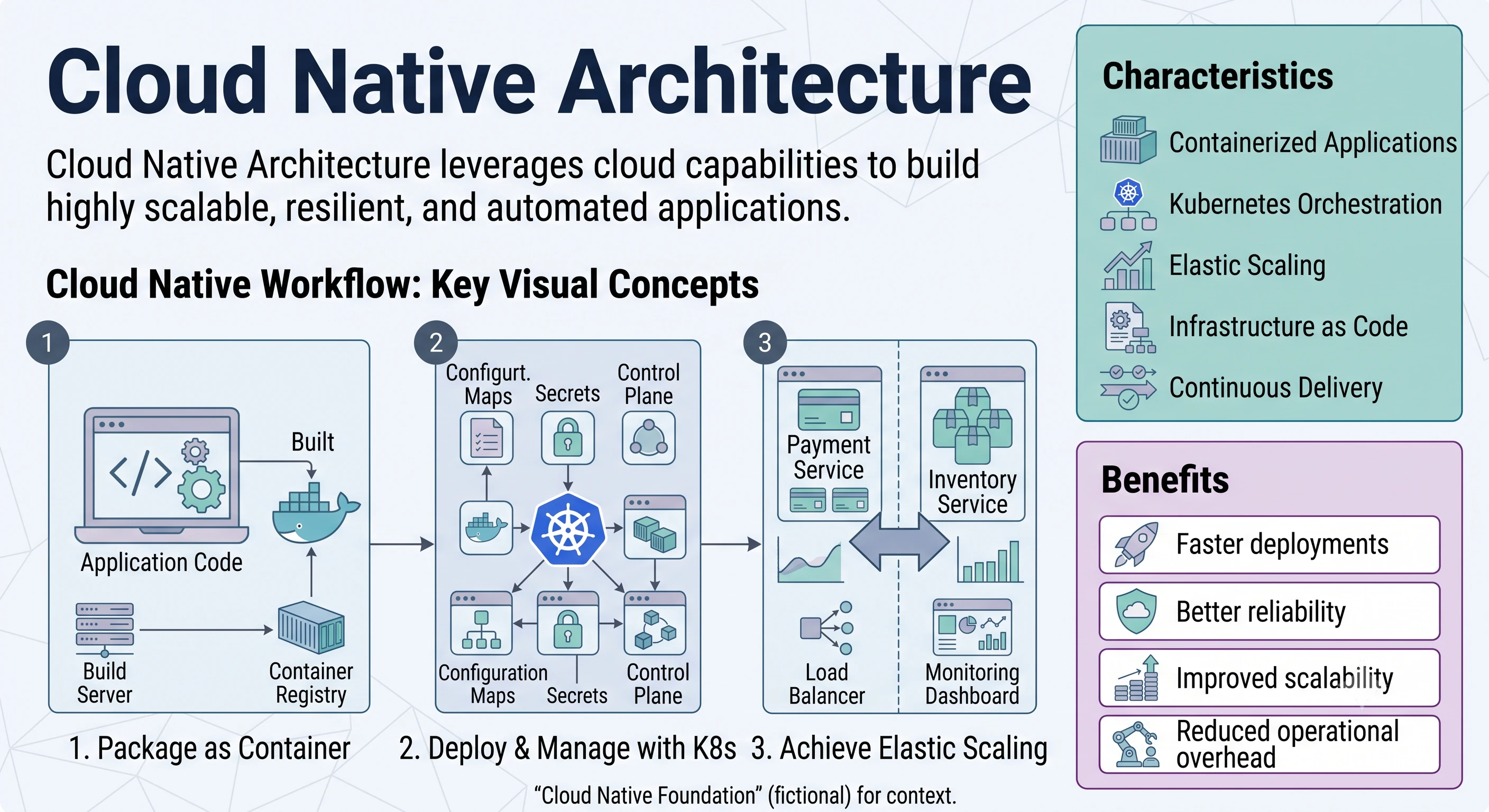
Cloud capabilities used to build scalable, resilient, automated applications.
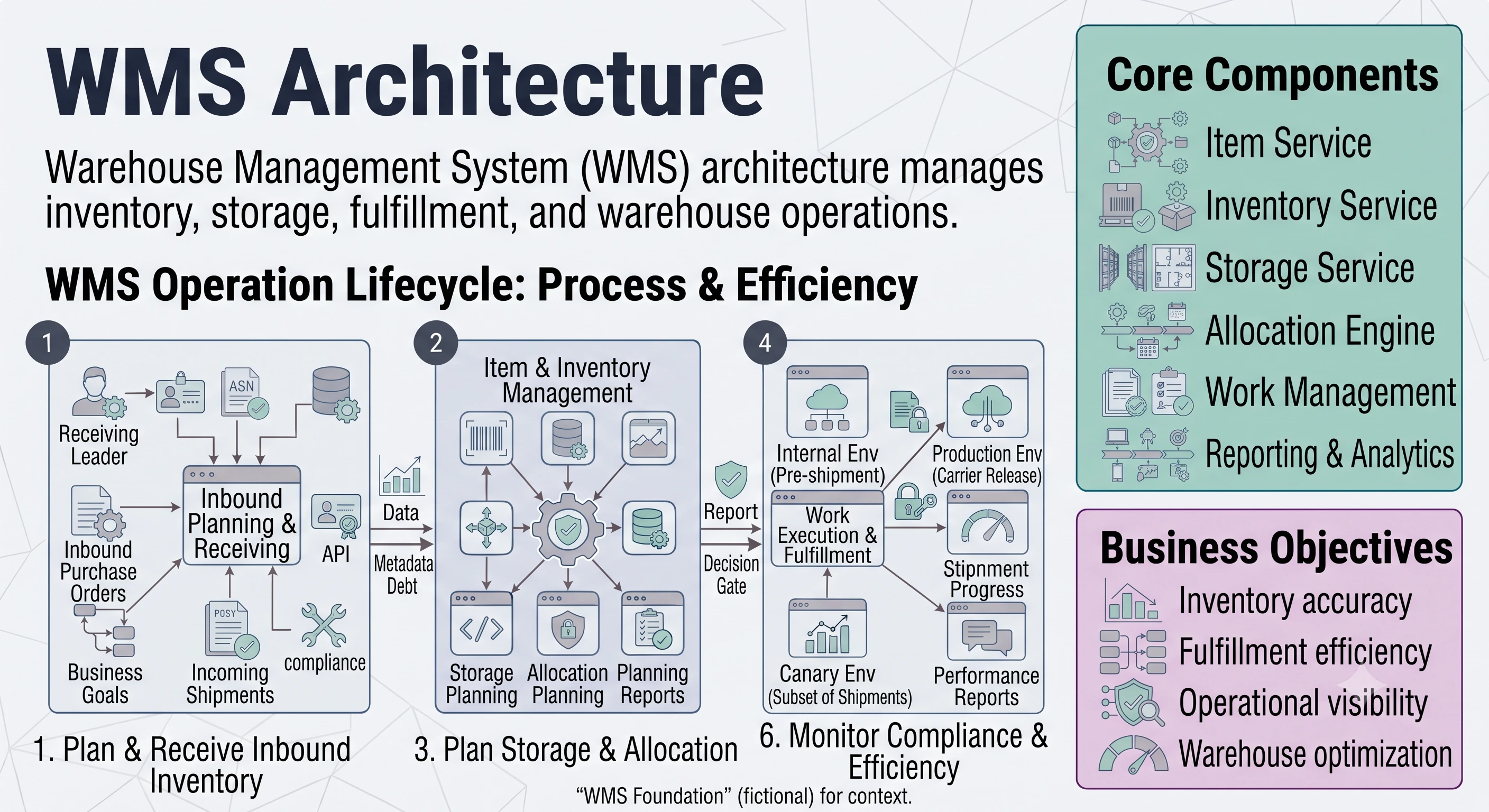
Manages inventory, storage, fulfillment and warehouse operations.
Core Services
Objectives
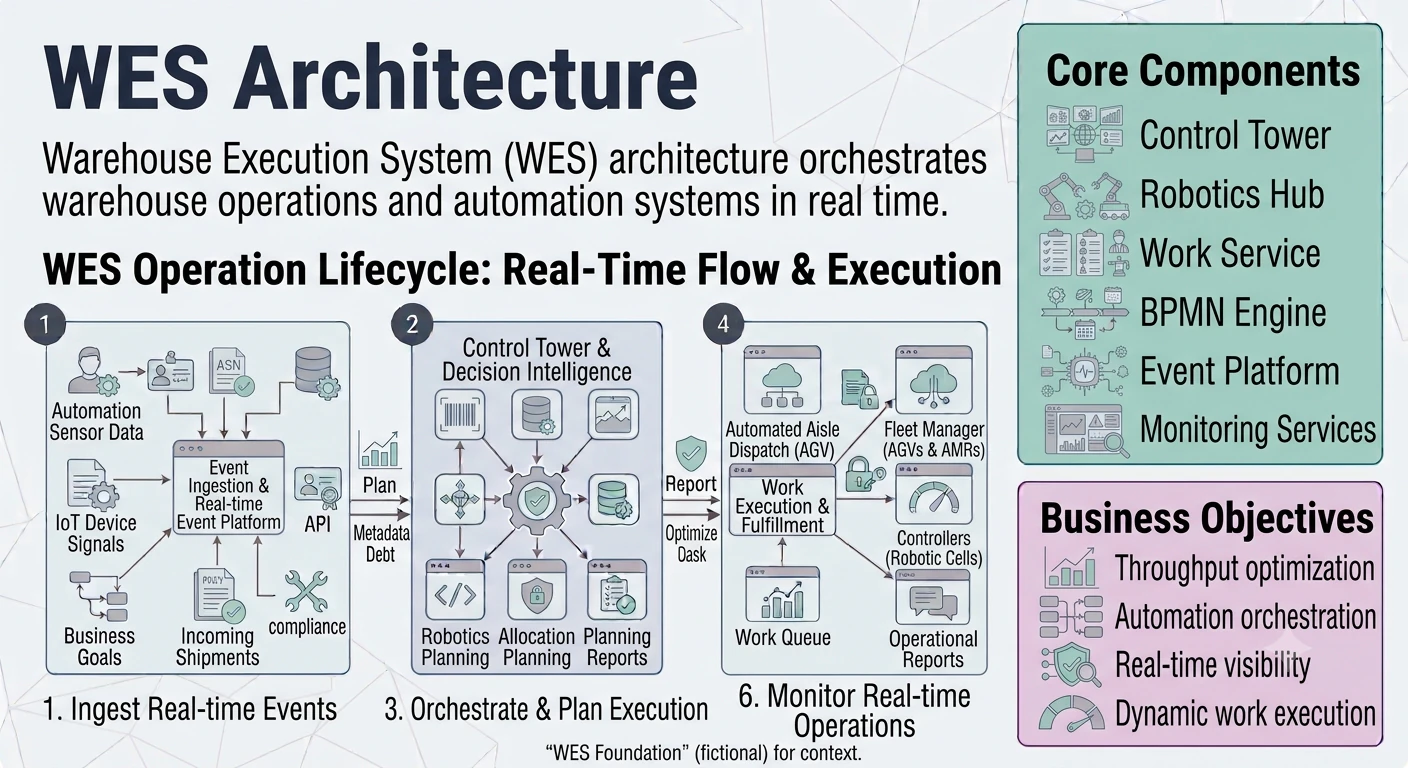
Orchestrates warehouse operations and automation systems in real time.
Core Services
Objectives
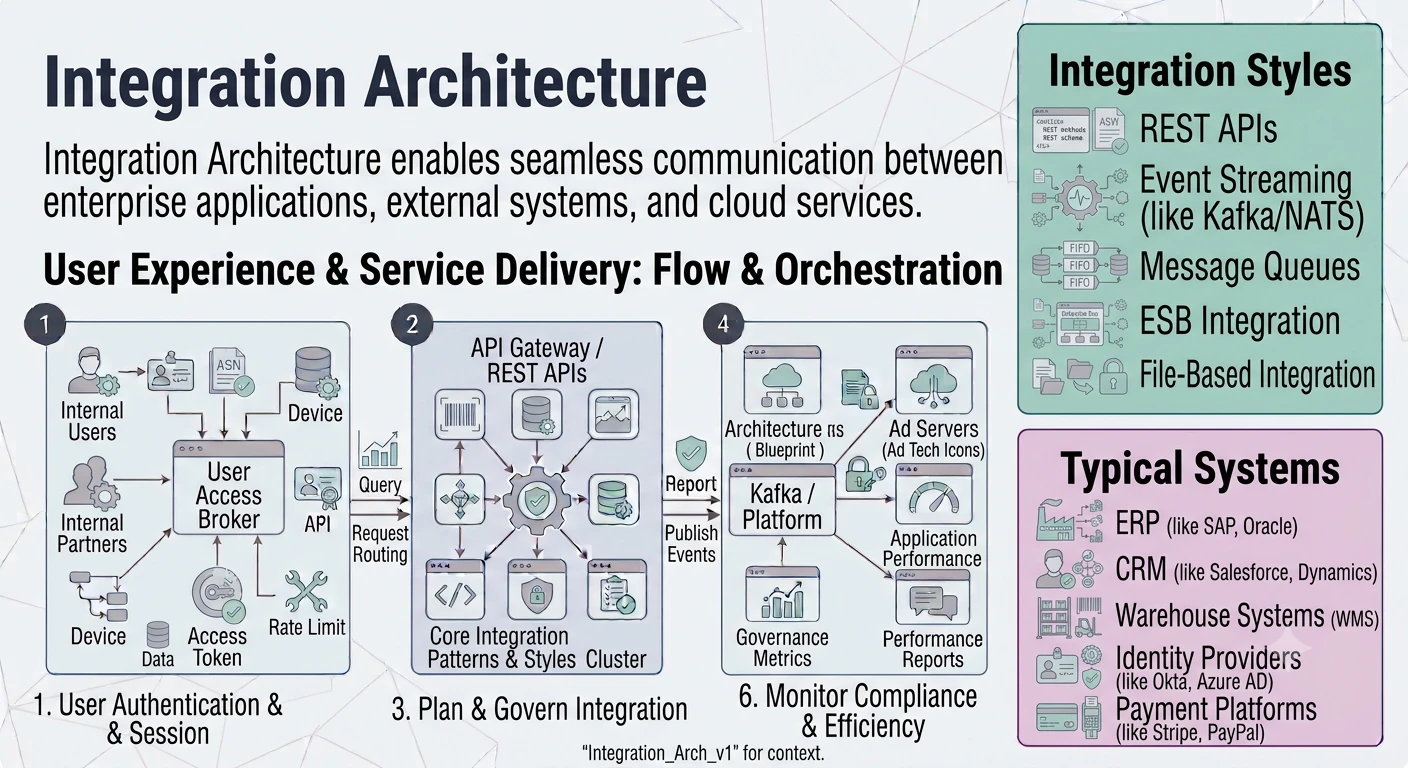
REST APIs, event streaming, message queues, ESB and file-based integration connecting ERP, CRM, warehouse systems, identity providers and payment platforms.
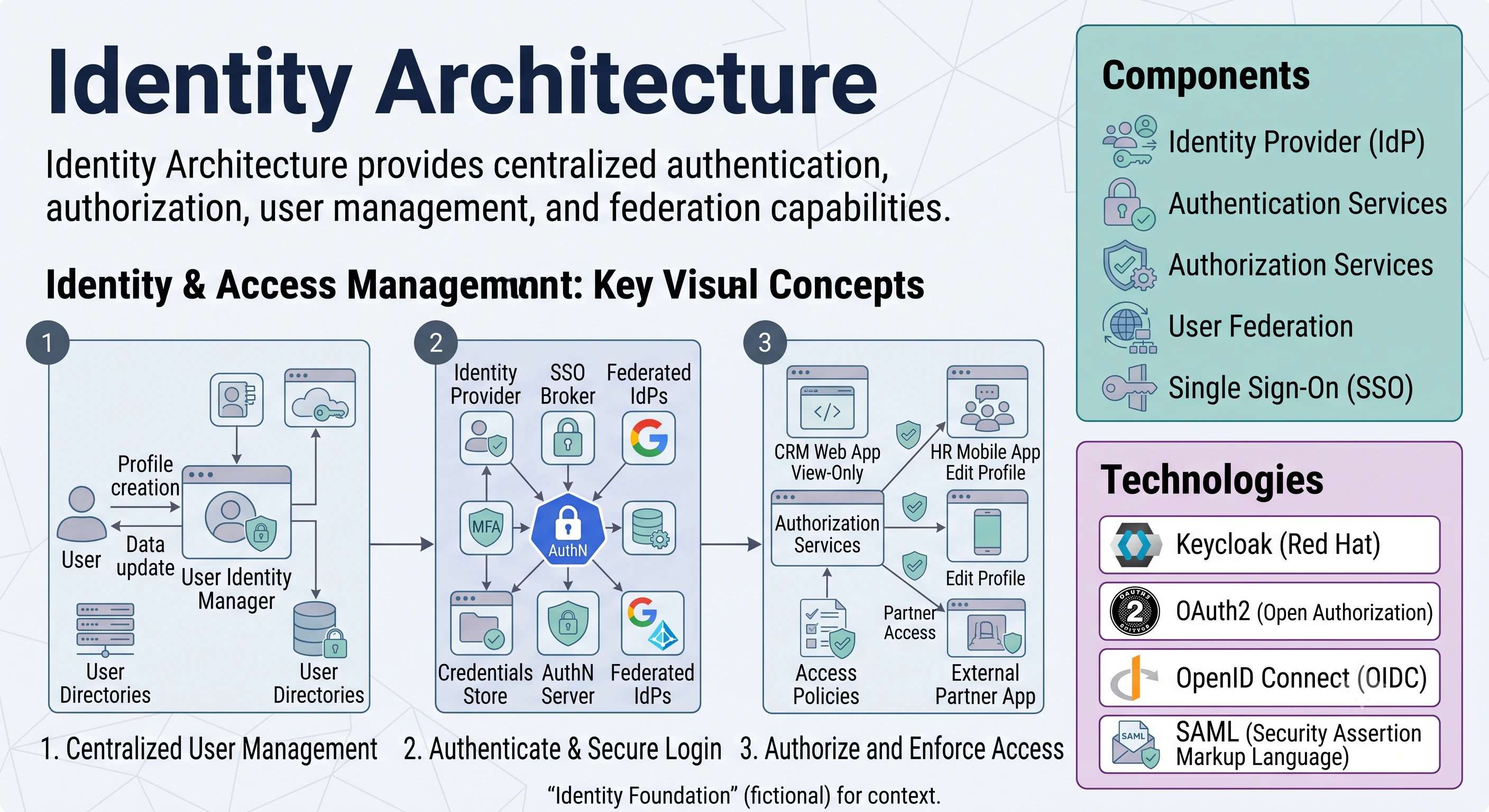
Centralized authentication, authorization, user management and federation using Keycloak, OAuth 2.0, OpenID Connect and SAML, with single sign-on across applications.
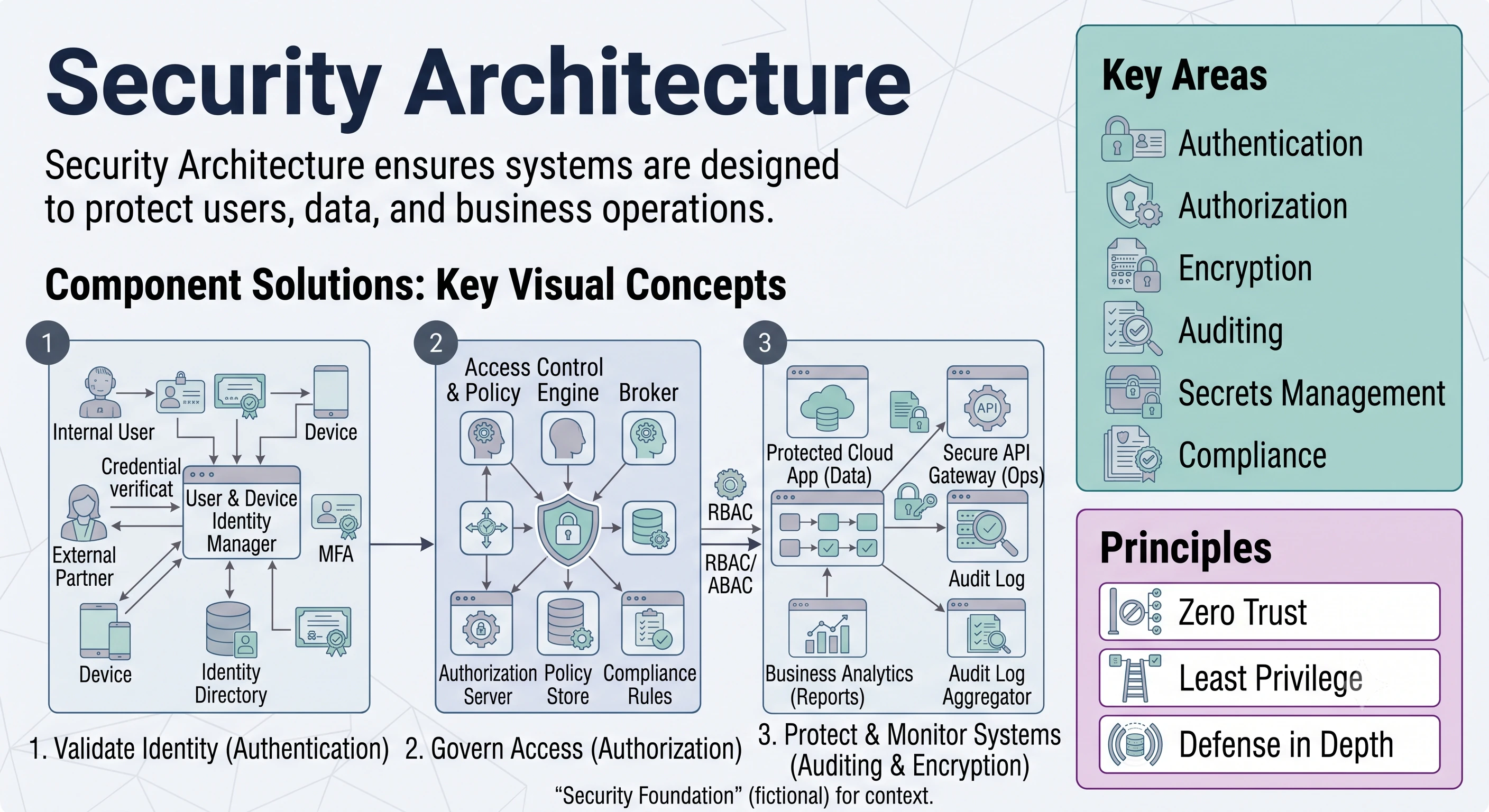
Zero trust, least privilege and defense in depth, covering authentication, encryption, auditing, secrets management and compliance.
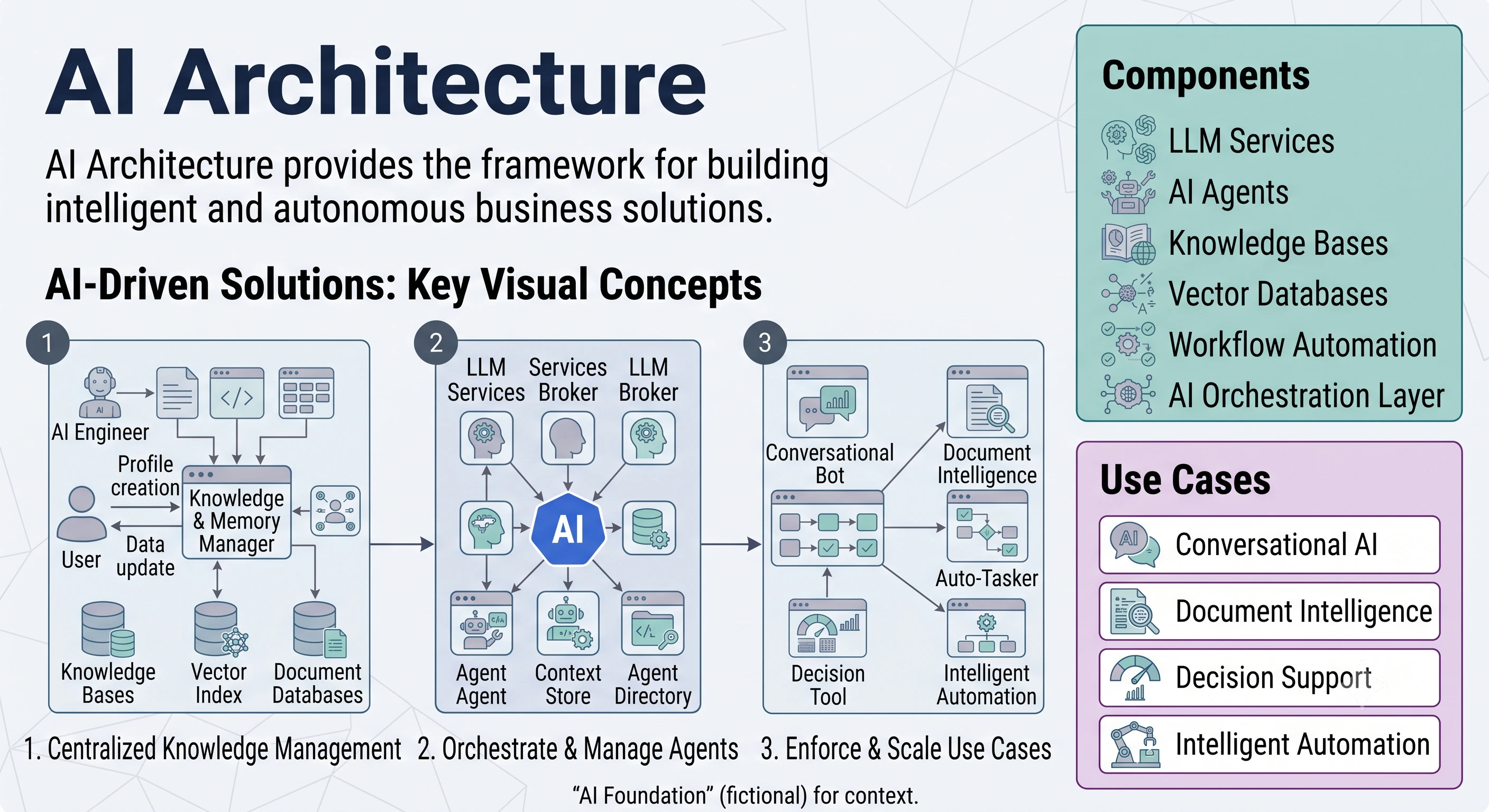
LLM services, AI agents, knowledge bases, vector databases and an orchestration layer powering conversational AI, document intelligence and decision support.
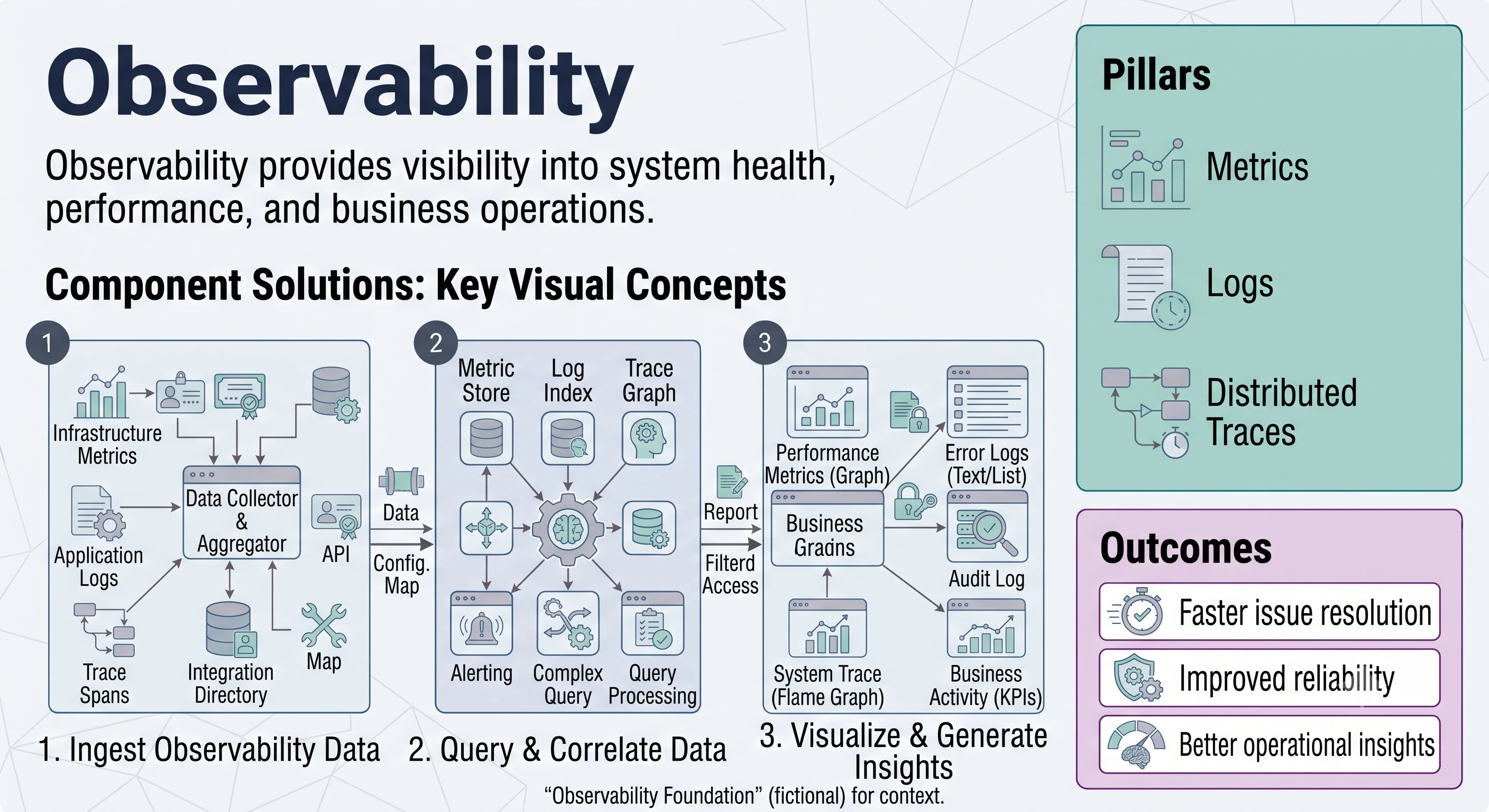
Metrics, logs and distributed traces feeding dashboards and alerting for faster resolution and better operational insight.
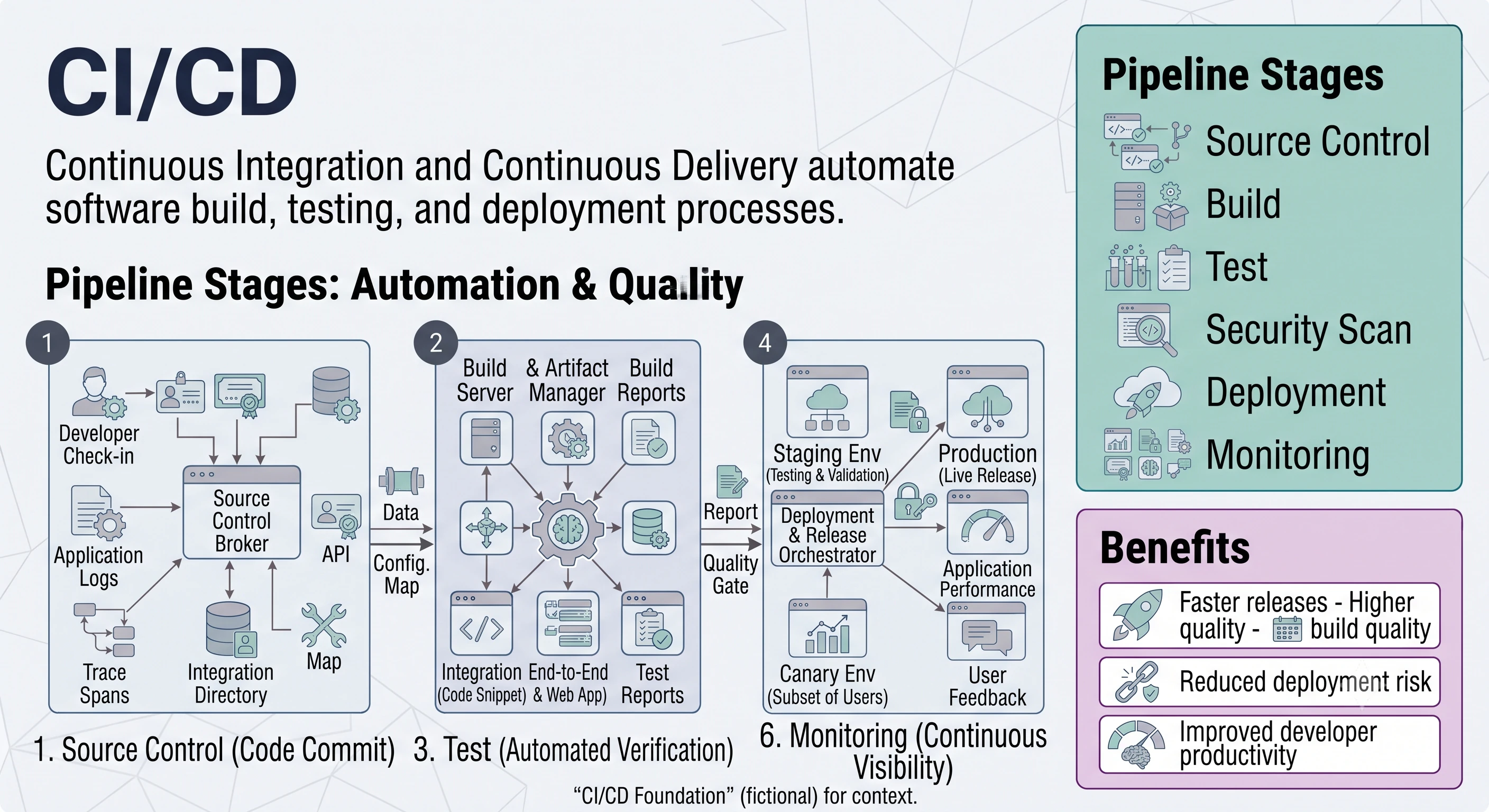
Source control to build, test, security scan, deployment and monitoring, for faster releases at lower risk.
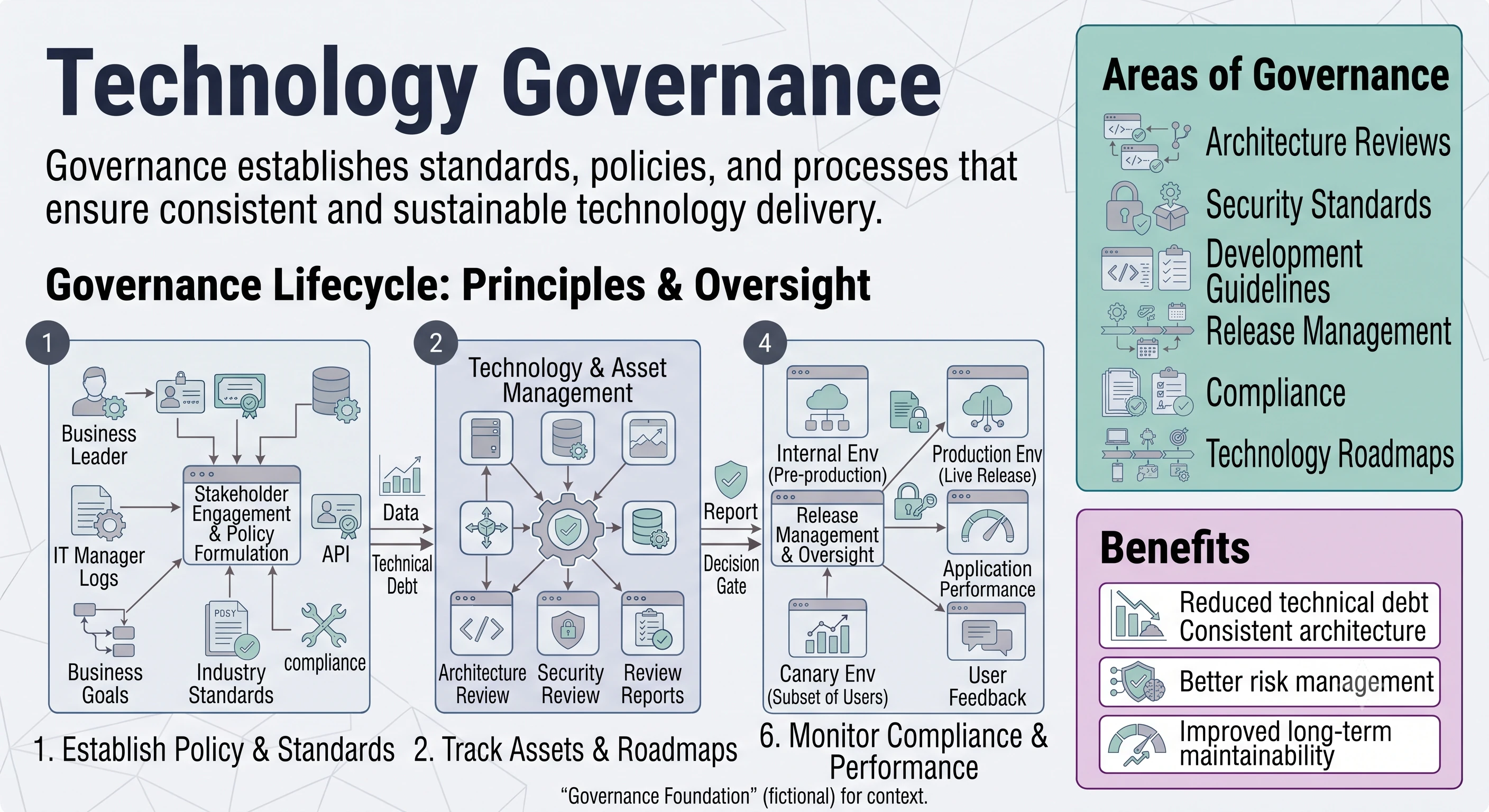
Architecture reviews, security standards, development guidelines, release management, compliance and technology roadmaps that reduce technical debt.

Available for consulting, architecture reviews, digital transformation, AI projects, warehouse modernization and technology leadership engagements.